

Coronectomy
Avoid Pain & Dental Complications
Avoid Complications From an Impacted Tooth With a Coronectomy in New York
If an impacted wisdom tooth is close to an important nerve, a traditional extraction may not always be the best option. In these situations, a coronectomy in New York can offer a safer alternative. This specialized procedure removes the visible portion of the wisdom tooth while leaving the roots undisturbed. By preserving the roots, your surgeon can reduce the risk of nerve injury while still addressing the source of concern.
At Mid-Manhattan Oral Surgery, we use advanced technology and careful treatment planning to determine whether a coronectomy is right for you. Patients choose our team because:
- We use detailed 3-D imaging to evaluate the position of wisdom teeth and nearby nerves.
- Our surgeons have extensive experience treating complex wisdom tooth cases.
- IV sedation is available for a comfortable surgical experience.
- Every treatment plan is customized to your specific needs.
- We provide detailed follow-up care to support healing.
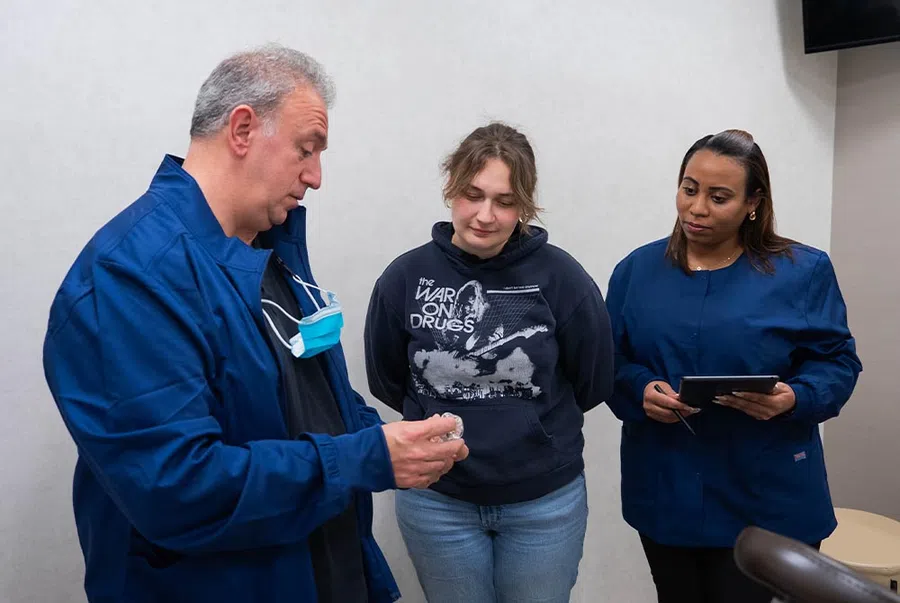
Consider a Conservative Approach to Wisdom Tooth Removal
A coronectomy is often recommended when the roots of a lower wisdom tooth are located very close to the inferior alveolar nerve.
Removing the entire tooth in these situations may increase the chance of nerve damage, which can affect sensation in the lips, chin, or tongue.
During the procedure, your surgeon removes the crown, or upper portion, of the tooth while leaving the roots securely in place. The remaining roots are monitored over time and often remain stable without causing problems.
For many patients, this approach allows the benefits of wisdom tooth treatment while reducing potential surgical risks. Your surgeon will carefully review imaging and discuss whether this option is appropriate for your situation.

Enjoy Comfortable Surgical Care When Removing Wisdom Teeth
Your comfort is a priority throughout treatment. Many patients choose IV sedation to help them feel deeply relaxed during their procedure.
While under sedation, you'll rest in a sleeplike state and likely remember very little about the surgery afterward.
Advanced diagnostic technology also plays a key role in treatment planning. Using digital imaging and 3-D scans, your surgeon can evaluate the exact position of your tooth and surrounding anatomy before treatment begins.
This level of precision helps guide surgical decisions and supports predictable results.
If a wisdom tooth is putting your oral health at risk but traditional extraction may present added challenges, a coronectomy may be the ideal solution.
Contact Mid-Manhattan Oral Surgery today to schedule a consultation for coronectomy in New York.
Frequently Asked Questions About Coronectomy
What is a coronectomy?
A coronectomy is a surgical procedure that removes the crown, or visible portion, of a wisdom tooth while leaving the roots in place. It is typically recommended when the roots are located very close to an important nerve. By preserving the roots, the procedure can lower the risk of nerve injury while still addressing problems caused by the impacted tooth.
Why would I need a coronectomy instead of a full extraction?
A coronectomy may be recommended instead of a full extraction when imaging shows that removing the entire tooth could increase the risk of nerve damage. In these situations, leaving the roots undisturbed can be a safer option. Your surgeon will evaluate the position of the tooth and surrounding structures before determining the most appropriate treatment.
Is a coronectomy painful?
A coronectomy is not typically painful during the procedure because local anesthesia is used to numb the area. Many patients also choose IV sedation for additional comfort. Some soreness and swelling are normal during recovery, but these symptoms aren't lasting and are manageable with prescribed medications and proper aftercare.
Can roots left behind after a coronectomy cause problems?
The roots left behind after a coronectomy usually don't cause problems when carefully selected for treatment. In many cases, the roots remain stable and cause no future problems. Your surgeon will monitor the area during follow-up visits to ensure proper healing and determine whether any additional treatment is necessary.
How long does recovery take after a coronectomy?
Recovery after a coronectomy is often similar to recovery after wisdom tooth removal. Most patients experience swelling and mild discomfort for several days, with noticeable improvement within the first week. Complete healing takes longer, but most people can return to normal daily activities relatively quickly while following their post-operative instructions.