

Coronectomy
Choose a Conservative Path to Relief
Treat Impacted Wisdom Teeth Safely With a Coronectomy in Rye Brook
If your wisdom tooth has erupted close to a nerve, removing it may not be the best option. That's when your surgeon may recommend a coronectomy in Rye Brook. This procedure removes the part of the tooth causing the problem while leaving the roots safely in place. We will explain your options to help you make an informed decision. Patients choose us because:
- We map your tooth and the nearby nerve in detail with 3-D imaging
- Our surgeons are experienced in complex and impacted wisdom tooth cases
- IV sedation is available, so you can rest comfortably during surgery
- Your plan is built around your anatomy, health, and goals
- We monitor your healing with thorough follow-up care
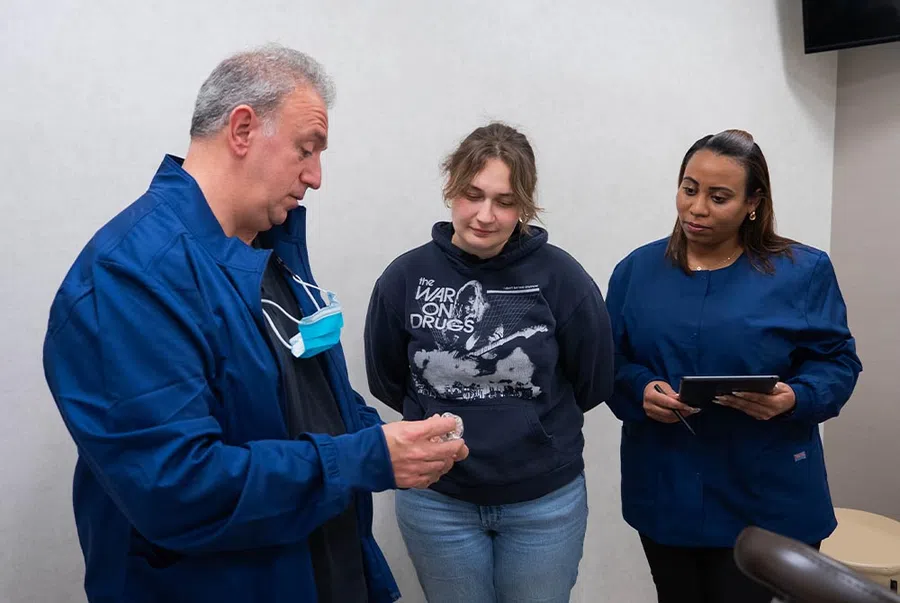
Reduce Your Risk With a Minimally Invasive Wisdom Teeth Surgery
Not every impacted wisdom tooth needs a coronectomy. It's recommended only when imaging shows that removing the roots could put an important nerve at risk. In those cases, leaving the roots alone is often the safer choice.
During treatment, your surgeon carefully removes the upper portion of the tooth. The roots remain securely in the jaw. Over time, they usually remain asymptomatic. Occasionally, the roots shift slightly as the area heals, which is typically minor.
Regular follow-up visits allow your oral surgeon to monitor your progress and recommend next steps as needed.

Stay Fully at Ease During Your Coronectomy
Good outcomes start with a clear picture. Our surgeons use 3-D scans to see your teeth, roots, and surrounding nerves in fine detail.
We'll walk you through what the images show and explain your options. We'll help decide whether a coronectomy or full extraction makes the most sense.
Your comfort matters too. With numbing medication and optional IV sedation, you will feel relaxed and remember little about the procedure. Afterward, our team provides detailed aftercare guidance and ongoing support as you heal.
Ready to protect your smile and your nerve health? Schedule a consultation for a coronectomy in Rye Brook.
Frequently Asked Questions About Coronectomy
What is a coronectomy?
A coronectomy is a partial wisdom tooth removal. Your surgeon takes out the top of the tooth, called the crown, and leaves the roots in your jaw. This is done when the roots are too close to a nerve to remove safely. It solves the problems caused by the tooth while protecting the feeling in your lips, chin, and tongue.
How does my surgeon know if my roots are too close to the nerve?
Your surgeon can determine whether your roots are too close to the nerve by reviewing X-rays and 3-D imaging of your jaw. Standard X-rays can show warning signs, such as overlapping roots or darkening near the nerve canal. A 3-D scan confirms the exact relationship between the tooth and the nerve. Together, these images help your surgeon decide whether a coronectomy is safer than a full extraction.
Why not just remove the whole tooth instead of a coronectomy?
Removing the entire tooth rather than performing a coronectomy isn't always the safest option when the roots touch or surround the nerve. Pulling those roots can bruise or injure the nerve, sometimes causing numbness, tingling, or altered sensation that may last for weeks, months, or longer. A coronectomy lowers that risk by leaving the roots alone while still removing the part of the tooth that causes problems.
Is it safe to leave tooth roots in my jaw after a coronectomy?
It's generally safe to leave tooth roots in your jaw after a coronectomy. Once the crown is removed, the bone and gum tissue usually heal over the roots, and the roots stay quietly in place. Because the roots are healthy and free of decay, they rarely cause trouble. Your surgeon will review your health and imaging to make sure leaving them is the right choice for you.
Can the roots left behind from a coronectomy cause problems later?
Roots left behind after a coronectomy can cause problems later in a small number of cases, but this is uncommon. Occasionally, roots move toward the surface over time or become infected. If that happens, they can usually be removed in a simple procedure, since they've often moved farther from the nerve. Follow-up visits and X-rays help your surgeon catch any changes early.
Can the roots move after a coronectomy?
The roots can move after a coronectomy, usually by a small amount in the months following surgery. This slight shift is normal and often moves the roots away from the nerve. In most cases, the movement stops once healing is complete and causes no symptoms. Your surgeon will compare follow-up X-rays with your original images to ensure everything is stable.
Is recovery from a coronectomy different from regular wisdom teeth removal?
Recovery from a coronectomy is very similar to regular wisdom teeth removal. Expect some swelling, tenderness, and jaw stiffness for a few days. Most people feel much better within the first week. Some patients find recovery slightly easier because less bone is removed near the nerve. Follow your aftercare instructions, eat soft foods, and keep the area clean as it heals.
Can I have a coronectomy on one tooth and a regular extraction on the others?
You can have a coronectomy on one wisdom tooth and a regular extraction on the others. Many patients need only one or two lower teeth treated with a coronectomy, while their remaining wisdom teeth are removed completely. Your surgeon can usually complete everything in a single visit. A personalized plan ensures each tooth gets the safest, most appropriate treatment.