

Peri-Implantitis
Restore Your Oral & Overall Health
Treat Peri-Implantitis in Hoboken Before It Threatens Your Dental Implant
We can help protect your dental implant and stop peri-implantitis in Hoboken before it leads to bone loss or implant failure. This condition causes inflammation and infection in the gum and bone around an implant, similar to gum disease around natural teeth. Our surgical team identifies the cause and builds a treatment plan to clear the infection and stabilize the implant.
Here are a few important benefits of peri-implantitis treatment:
- Stops infection before it spreads to the bone supporting your implant
- Helps prevent bone loss that can threaten the stability of your implant
- Reduces gum inflammation and bleeding around the implant site
- Addresses the cause early, often avoiding the need for implant removal
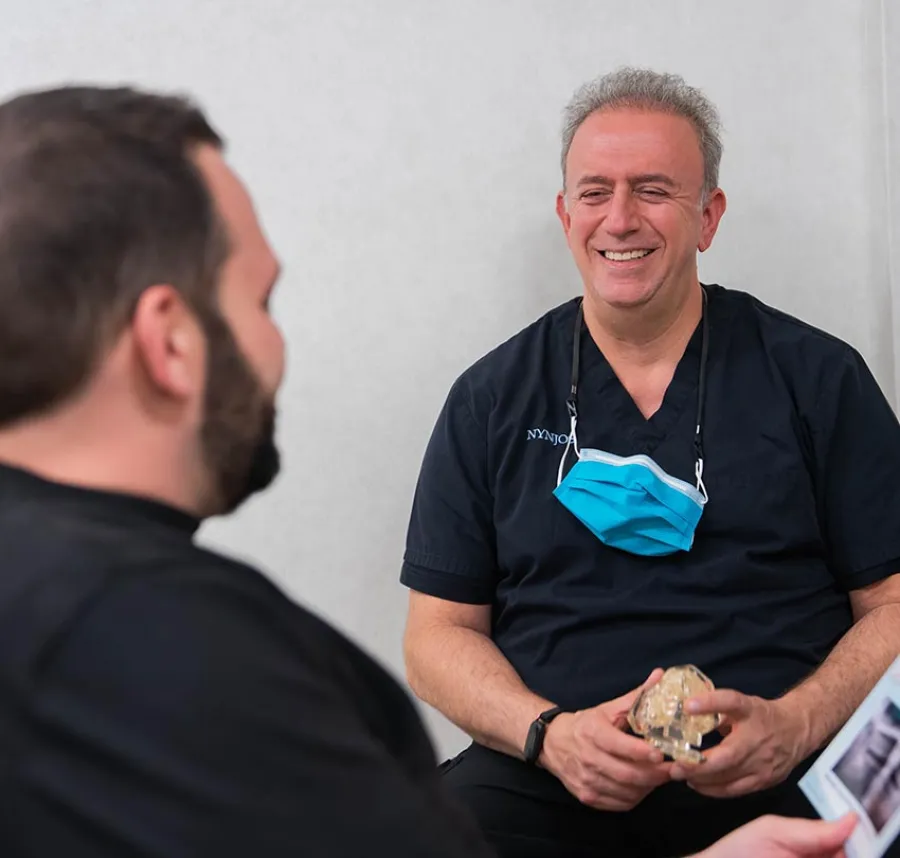
Recognize the Signs of Dental Implant Problems Early
Symptoms of peri-implantitis may include red or swollen gums around the implant, along with bleeding when you brush or floss. You may also notice mild discomfort near the implant or a feeling that it's slightly loose.
This infection usually develops when bacteria build up around an implant. Poor oral hygiene, smoking, and untreated gum disease can raise the risk of infection near the gumline.
Our Hoboken surgical team will examine the implant closely and use digital imaging to check the bone level supporting it. Identifying peri-implantitis early gives us more treatment choices and a better chance of saving the implant.

Explore Your Treatment Choices for Infection Around Implants
Treatment for peri-implantitis depends on how much infection and bone loss are present. Mild cases may respond to a deep cleaning around the implant surface paired with antibiotics to clear the infection.
More advanced cases often need minor surgery to access and clean the implant threads beneath the gum. Our team may also add bone grafting material to rebuild support around the implant if bone loss has occurred.
We will monitor your healing closely after treatment with follow-up visits to check the gum and bone around your implant. Keeping up with good oral hygiene and regular checkups afterward helps prevent the infection from coming back and protects your implant long-term.
Find out if you have peri-implantitis in Hoboken by contacting our office today for an exam.
Frequently Asked Questions About Peri-Implantitis
What is peri-implantitis?
Peri-implantitis is an infection that causes inflammation in the gum and bone tissue surrounding a dental implant. It develops when bacteria build up around the implant, much like plaque causes gum disease around natural teeth. Left untreated, peri-implantitis can lead to bone loss and eventually threaten the stability of the implant itself.
What causes peri-implantitis?
Peri-implantitis is caused by bacterial buildup around a dental implant, often linked to poor oral hygiene or plaque left along the gumline. Smoking, untreated gum disease, and certain health conditions can also raise the risk. Once bacteria accumulate near the implant, they trigger inflammation that can spread into the surrounding bone over time.
What are the signs of peri-implantitis?
Common signs of peri-implantitis include red or swollen gums around the implant, bleeding when brushing or flossing, and mild discomfort near the site. Some patients notice the implant feels slightly loose, which often signals bone loss beneath the gum. A bad taste or visible pus around the implant can also indicate infection.
Is peri-implantitis the same as gum disease?
Peri-implantitis is similar to gum disease but affects the tissue and bone surrounding a dental implant instead of a natural tooth. Both conditions start with bacterial buildup and inflammation, and both can progress to bone loss if left untreated. However, peri-implantitis can move more quickly, since implants lack the same natural defenses as teeth.
Can peri-implantitis be reversed?
Peri-implantitis can often be treated successfully, especially when caught early before significant bone loss occurs. Treatment ranges from deep cleaning and antibiotics for mild cases to surgical intervention for more advanced infections. While early cases respond well to treatment, restoring lost bone around the implant may not always be fully achievable.
How is peri-implantitis diagnosed?
Peri-implantitis is diagnosed through a clinical exam checking for gum swelling, bleeding, and pocket depth around the implant. Dental X-rays or imaging help confirm whether bone loss has occurred beneath the surface. Comparing current imaging to earlier scans taken after implant placement often helps track how much bone loss has occurred.
Does peri-implantitis always require surgery?
Not every case of peri-implantitis requires surgery, especially when caught early with minimal bone loss. Mild infections often respond to a thorough cleaning around the implant combined with antibiotics to clear the bacteria. More advanced cases with significant bone loss typically need minor surgery to access and treat the infected area.
Are smokers at higher risk for peri-implantitis?
Smokers face a higher risk of developing peri-implantitis because smoking reduces blood flow and slows healing around the implant site. This makes it harder for the body to fight off bacterial infection once it starts. Smokers are also more likely to experience implant failure overall, making peri-implantitis prevention especially important for this group.