

Dental Implant Revision Surgery
Give Your Implant a Stronger Foundation

Regain a Strong Smile With Dental Implant Revision Surgery in Rye Brook
When an implant doesn't work as it should, you may find yourself chewing on one side or hiding your smile in photos. With careful planning and skilled surgical correction, many implant concerns can be resolved. Dental implant revision surgery in Rye Brook can:
- Make your implant more stable and reliable
- Correct an implant that sits at the wrong angle or position
- Restore bone or gum tissue that has been lost
- Improve how your restoration looks next to your natural teeth
- Help you chew and speak more comfortably
- Lower the chance of future implant complications

Find Out If Your Implant Needs Revision
Revision surgery is typically recommended when a dental implant isn't delivering the result you expected. Sometimes the implant sits at an angle or depth that makes the crown look or feel unnatural. Other times, bone or gum tissue around the implant has receded, leaving the area weaker or more visible.
You may notice discomfort, food getting trapped, or trouble chewing and speaking. Whatever the concern, a detailed exam comes first. Your surgeon will review 3-D imaging and examine your implant closely.
We will look at how your implant is anchored, how much bone surrounds it, and how healthy the gums are. With that information, we can determine whether revision, another treatment, or a combination makes the most sense for your goals.
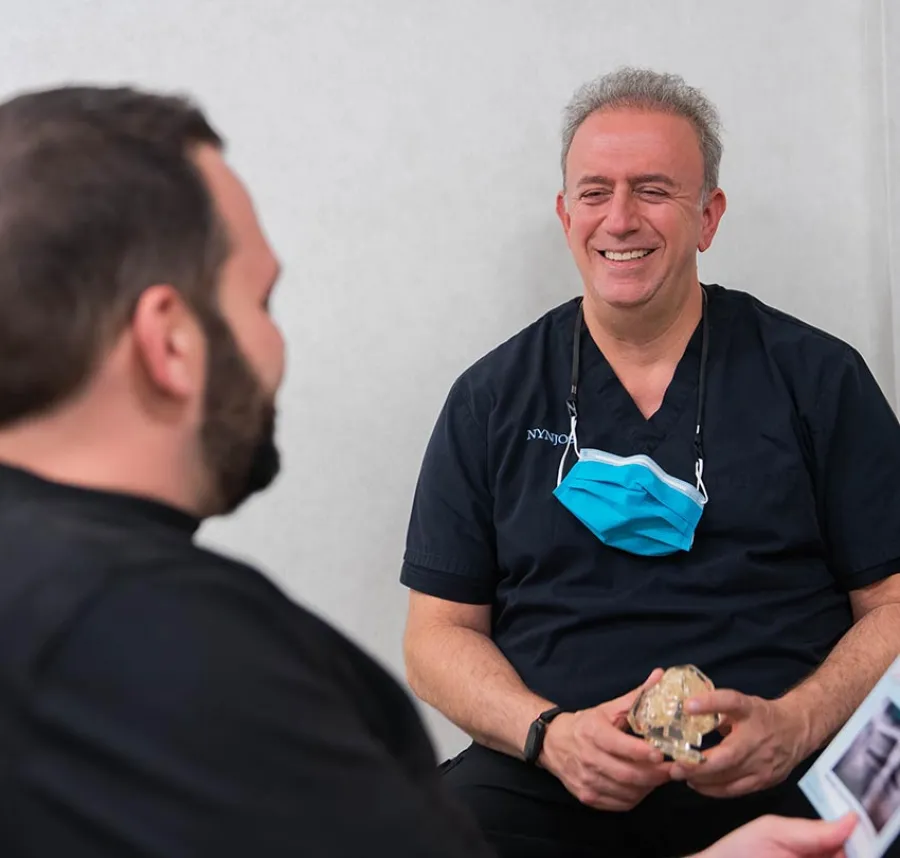
Explore What Revision Surgery Can Do for Your Dental Implant
Every implant concern is different. Revision surgery isn't one single procedure. Your surgeon will combine the techniques that best address the cause of your problem. We protect as much healthy tissue as possible.
We'll explain each step before treatment begins. You know exactly what to expect. You can opt for IV sedation if you feel nervous. Your surgeon may need to reposition the implant. Adjusting or correcting an implant's angle or placement can improve both function and appearance.
Rebuilding lost bone with bone grafting strengthens the foundation around your implant and supports long-term stability. Improving the gums around your implant can protect it from further recession and create a more natural look.
You may also need a new crown, bridge, or denture. It can be placed once the implant and surrounding tissue are healthy. If needed, we can ready the site for a new implant or another restoration in the future.
Get your implant back on track with dental implant revision surgery in Rye Brook.
Frequently Asked Questions About Dental Implant Revision Surgery
What's the difference between implant revision and implant replacement?
The difference between implant revision and implant replacement is whether the original implant stays. Revision corrects problems while keeping your existing implant, often by improving bone, gum tissue, or implant position. Replacement involves removing the implant and placing a new one after the area heals.
Can an implant placed at the wrong angle be fixed?
An implant placed at the wrong angle can often be fixed, depending on how far off it is and how much bone surrounds it. Sometimes a custom abutment or new crown can compensate for the angle. In other cases, the implant may need to be repositioned or replaced.
Can revision surgery improve how my implant looks?
Revision surgery can improve how your implant looks. If the gums have receded, a gray edge is showing, or the crown appears too long, procedures like gum grafting or a new restoration can help. Your surgeon will evaluate the bone and soft tissue to plan changes that blend your implant more naturally with your surrounding teeth.
Will I need a bone graft during implant revision surgery?
You may need a bone graft during implant revision surgery if bone has thinned around your dental implant. Grafting rebuilds that support so the implant stays strong and secure. Not every patient needs it, though. Your surgeon will review your 3-D scans to see how much bone is present and whether grafting will improve your long-term result.
Will I need a new crown after implant revision?
You may need a new crown after implant revision, especially if the implant position changes or the old crown no longer fits well. In some cases, your existing restoration can be reattached once the area heals. Your surgeon will let you know ahead of time whether a new crown, bridge, or denture will be part of your treatment plan.
What is recovery like after implant revision surgery?
Recovery after implant revision surgery usually involves mild soreness and swelling for several days. Most patients return to normal routines within a few days to a week. If bone or gum grafting was performed, full healing takes longer, often several months. Soft foods, gentle cleaning, and following your aftercare instructions help the area heal smoothly.
How long before I can use my dental implant normally again?
You can usually use your dental implant normally again once the treated area has healed and any new restoration is placed. For minor corrections, that may take a few weeks. If bone grafting or repositioning was involved, it can take several months before you can chew fully on that side.
How successful is implant revision surgery?
Implant revision surgery is often very successful when the cause of the problem is diagnosed correctly. Your results depend on bone quality, gum health, your overall health, and how well you care for the implant afterward. Avoiding smoking, keeping up with cleanings, and following your surgeon's guidance all improve the chances of a lasting result.